OpenAI Dots Are Rolling Out: Define the Boundary Before the Goal
Dots can keep working between conversations and use connected apps. A small, reviewable, read-only task is the safest useful place to begin.
MUSE RADAR / TOPIC
Service access, permissions and real account availability.
Dots can keep working between conversations and use connected apps. A small, reviewable, read-only task is the safest useful place to begin.
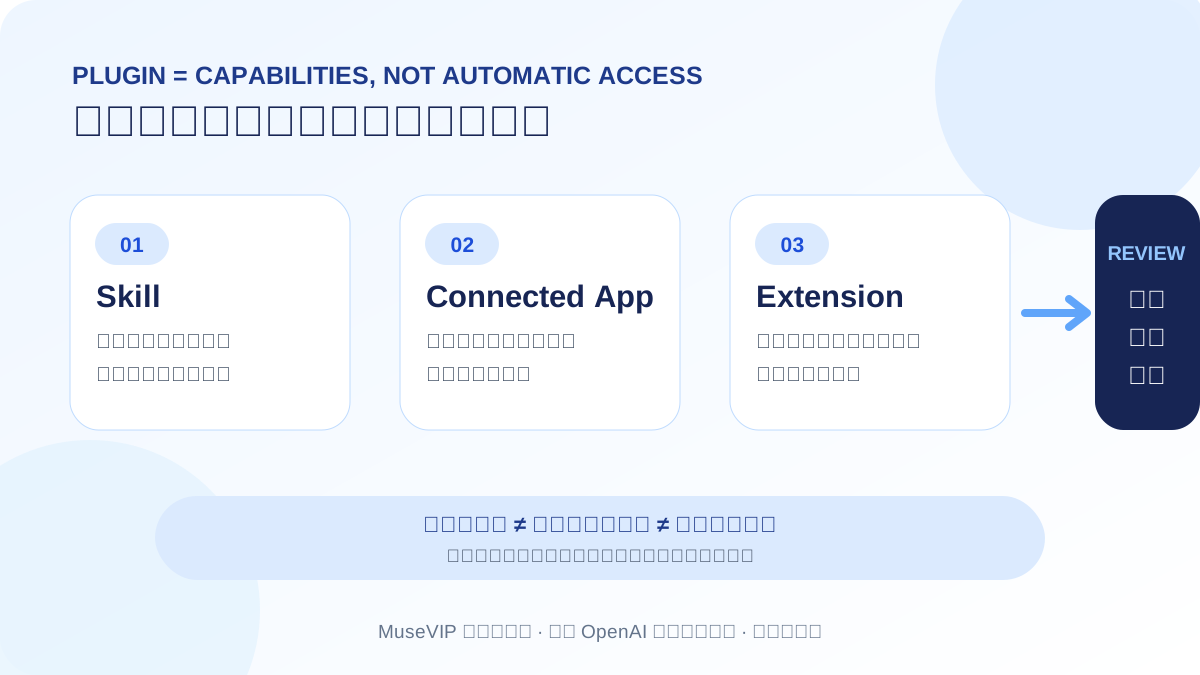
OpenAI's updated guidance separates reusable instructions, connected apps and interactive extensions. Installing a plugin does not authorize its data access or make every feature available everywhere.
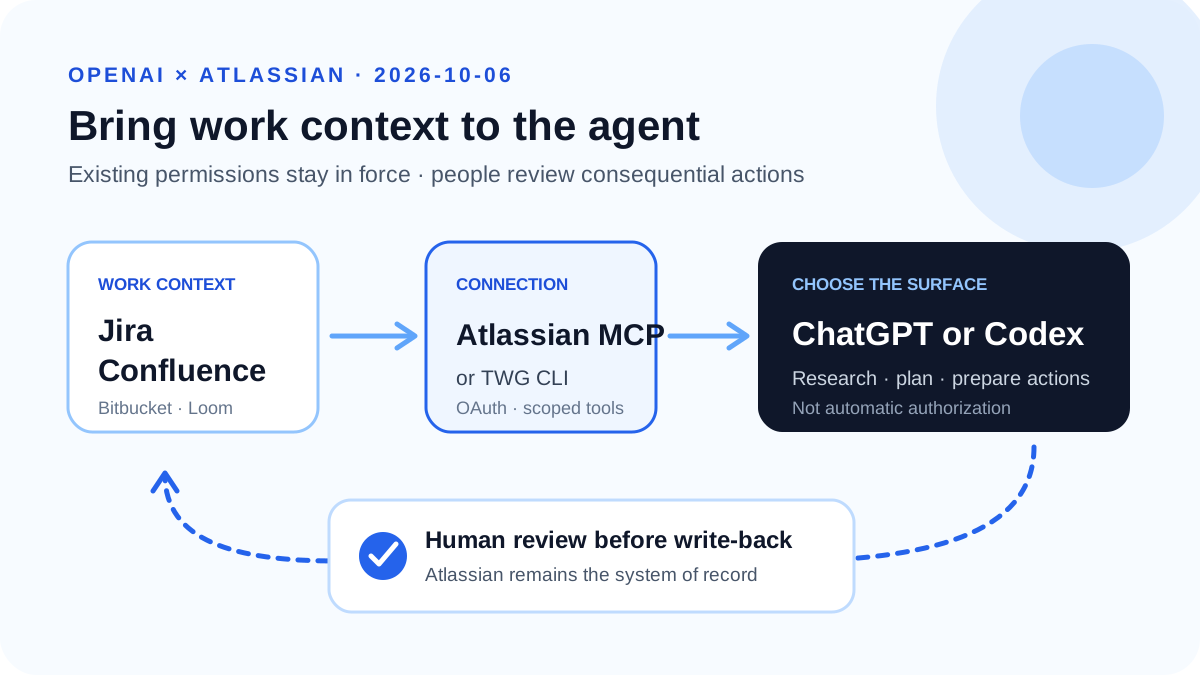
OpenAI and Atlassian expanded their partnership on October 6 and documented four practical routes: Atlassian MCP in ChatGPT or Codex, Jira-to-Codex deeplinks, and OpenAI model choice in Rovo Agents. Plans, permissions and data handling differ, so begin with read-only retrieval.

Google Maps Platform published Agent Skills documentation and an Apache-2.0 repository on October 7. The current google-maps-platform Skill covers maps, places, addresses, routing, 3D, geofencing and environmental data, installs through Skills CLI or Gemini CLI, and complements the Code Assist MCP server.

On October 6, Meta reorganized Business Agent guidance into build-from-scratch and add-a-capability paths, with explicit WhatsApp number, onboarding, dual-token-permission and testing prerequisites. This is a concrete enterprise-platform follow-up, not proof that Muse API or Muse Code is generally available.

Meta's September 29 announcement expands Muse into business workflows. A source-linked, read-only brief is a practical first task.