
MUSE RADAR / EVENT BRIEF
Google Open-Sources AQuA to Diagnose Production Agents Without Auto-Editing Code
Google open-sourced the AQuA reference implementation and companion Skill on October 8. It samples recent production sessions, reviews and clusters failures, tracks recurrence, and can anchor root-cause suggestions to a deployed source snapshot. Raw evidence stays in the operator's Google Cloud project, and AQuA does not change the production agent automatically.
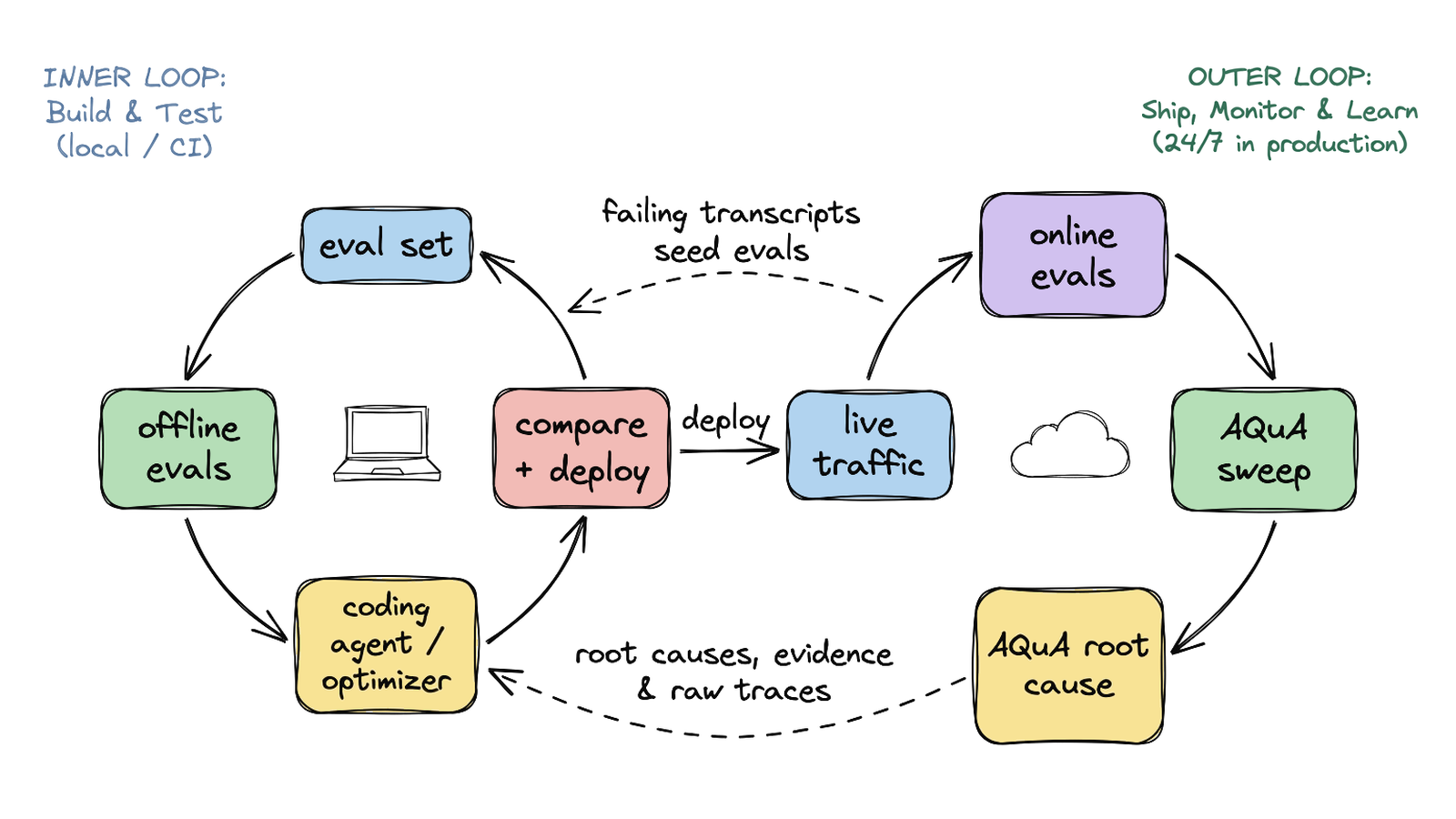
AQuA is an out-of-band reviewer, not another step in each user request
Google announced and open-sourced the Ambient Quality Agent reference implementation on October 8. It can run on a schedule, after deployment or on demand, sampling up to 1,000 recent sessions from Cloud Trace, Cloud Logging or BigQuery. It reviews them against a nine-point checklist, clusters similar failures and verifies each candidate against as many as three full transcripts.
Confirmed issues are tracked as NEW or RECURRING in BigQuery and are automatically marked RESOLVED only after 14 days without another sighting. AQuA stays outside the production request path and does not write its diagnosis back into the original agent.
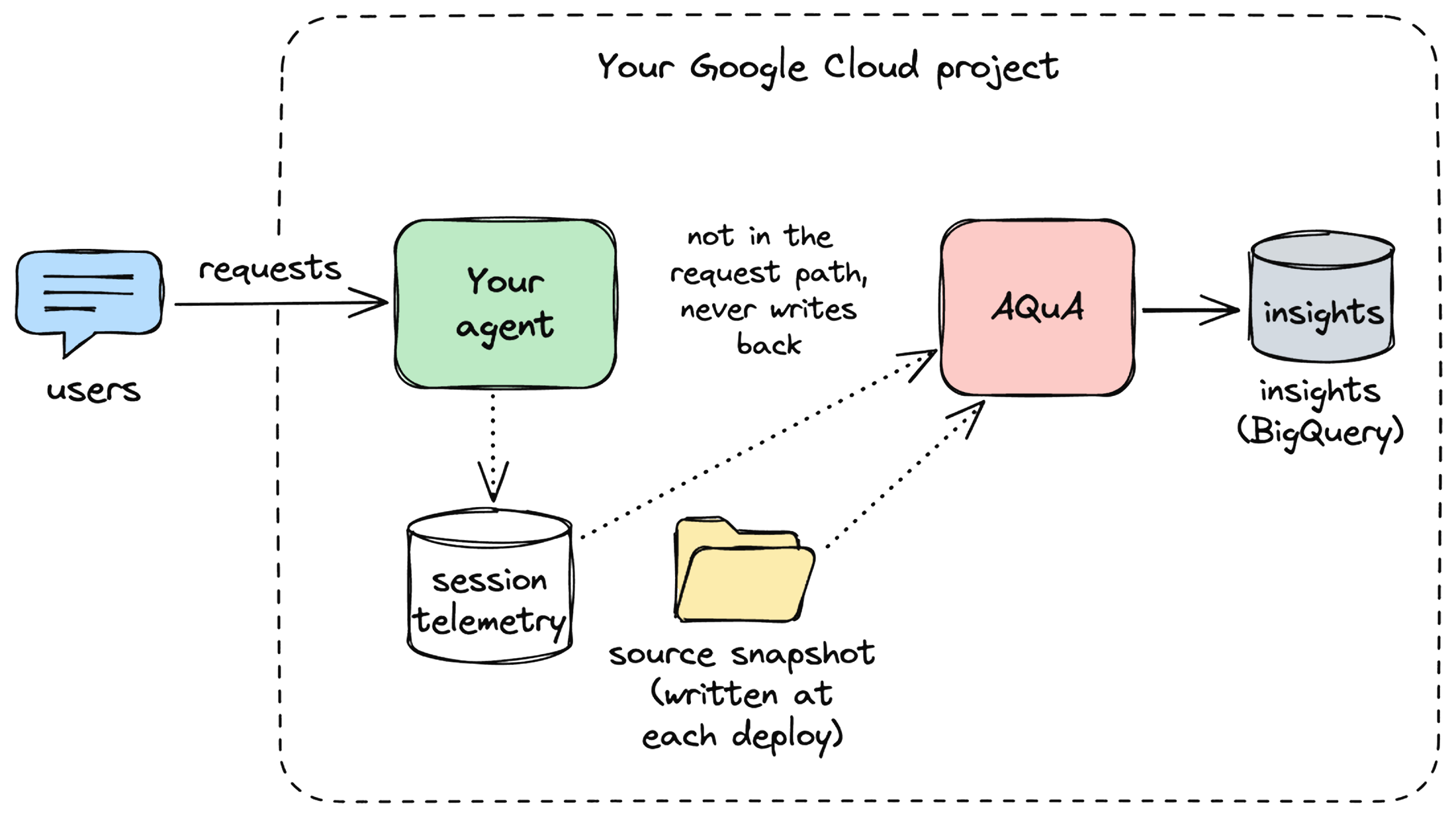
It can point to source lines, but it does not ship a fix
Root-cause analysis can start from dashboard chat or agents-cli. AQuA anchors suggestions to an immutable deployment snapshot and cites file paths and line ranges. Google explicitly says it neither applies the edit nor opens a pull request, preserving a human review boundary between diagnosis and execution.
Raw transcripts, source snapshots and BigQuery evidence remain in the operator's Google Cloud project. Teams still need to inspect personal data in logs, service-account scopes, retention and whether the diagnostic agent can read information outside the target service.
Validate one known failure before sampling at scale
Start with a small set that contains one known failure and normal outcomes. Check whether sampling selects the intended release, whether the issue description is supported by full transcripts and cited source lines, and whether a one-off user input is being mistaken for a systemic defect.
Google provides an agents-cli-aqua Skill separately from its inner-loop evaluation Skill. Our activity-log guide helps inspect traces, the ongoing-task guide defines review cadence, the reusable-Skills guide packages boundaries, and the MCP guide narrows external tool access.
What this edition verifies
This brief verifies Google's official post, repositories and installation path. We found no independent, reproducible community deployment report in the 72-hour window, so official demonstrations are not presented as universal outcomes and support beyond Google's documented Cloud observability stack is not implied.
Source notes
Event date and our publication date are shown separately. Community reports describe individual experiences.