
MUSE RADAR / EVENT BRIEF
Anthropic Opens Three Cyber Access Tiers—Verification Comes Before Fewer Blocks
Anthropic expanded its Cyber Verification Program on October 6 with separate tiers for defense, authorized red teaming and critical-system testing. This is not a universal safety bypass: applicants must establish their work and authorization, administrators assign access, and program activity generally requires data retention for misuse monitoring.
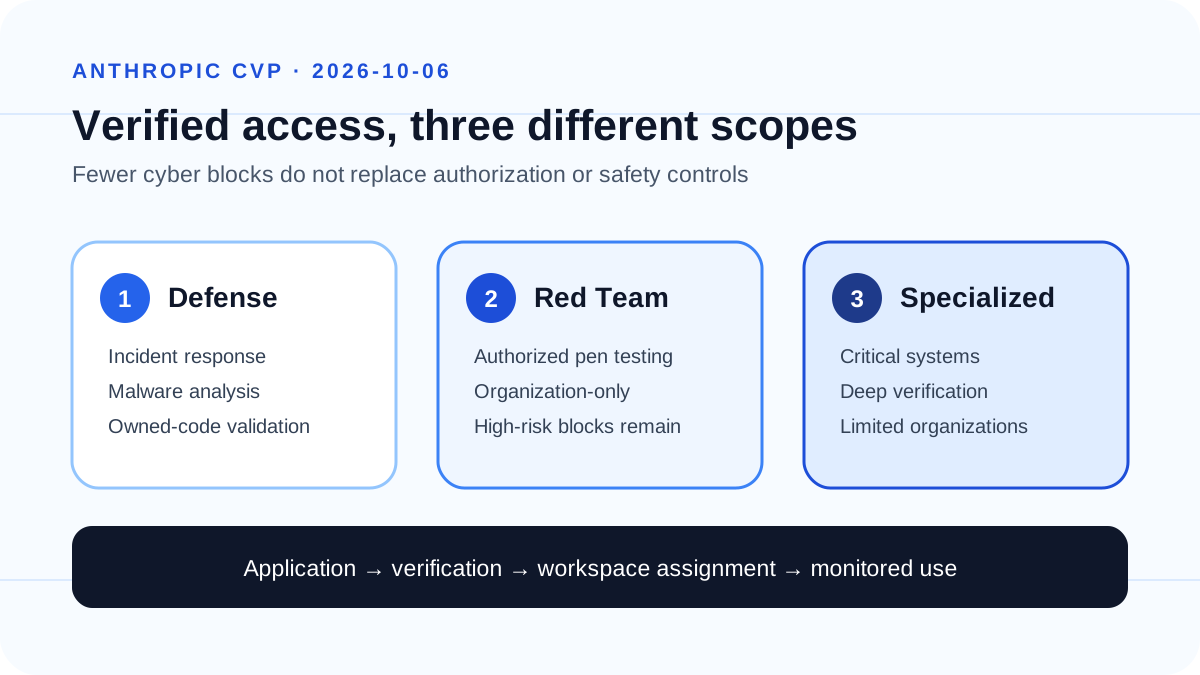
The expansion covers verified security work, not a general safeguard switch
On October 6, Anthropic combined the Cyber Verification Program and Project Glasswing into three levels. Defense Access covers work such as incident response, malware analysis and vulnerability validation. Red Team Access adds authorized penetration testing. Specialized Access is limited to a small set of verified organizations testing critical systems such as power, aviation, telecommunications or financial infrastructure.
Every tier requires an application and verification. Individual researchers may apply for the defense tier, while Red Team and Specialized Access are currently organization-only. Anthropic's Usage Policy remains in force, and actions involving ransomware, physical harm or mass disruption do not become acceptable merely because an organization joins the program.
Document the task, authorization and stop conditions first
Anthropic says the tiers include its most capable current models, including Claude Opus 5.5, Sonnet 5.5 and Mythos 5.1, with future models considered as well. The practical difference is how cyber classifiers treat qualified work. Generally available models can still handle code review, known-issue patching, vulnerability work on owned source and alert triage.
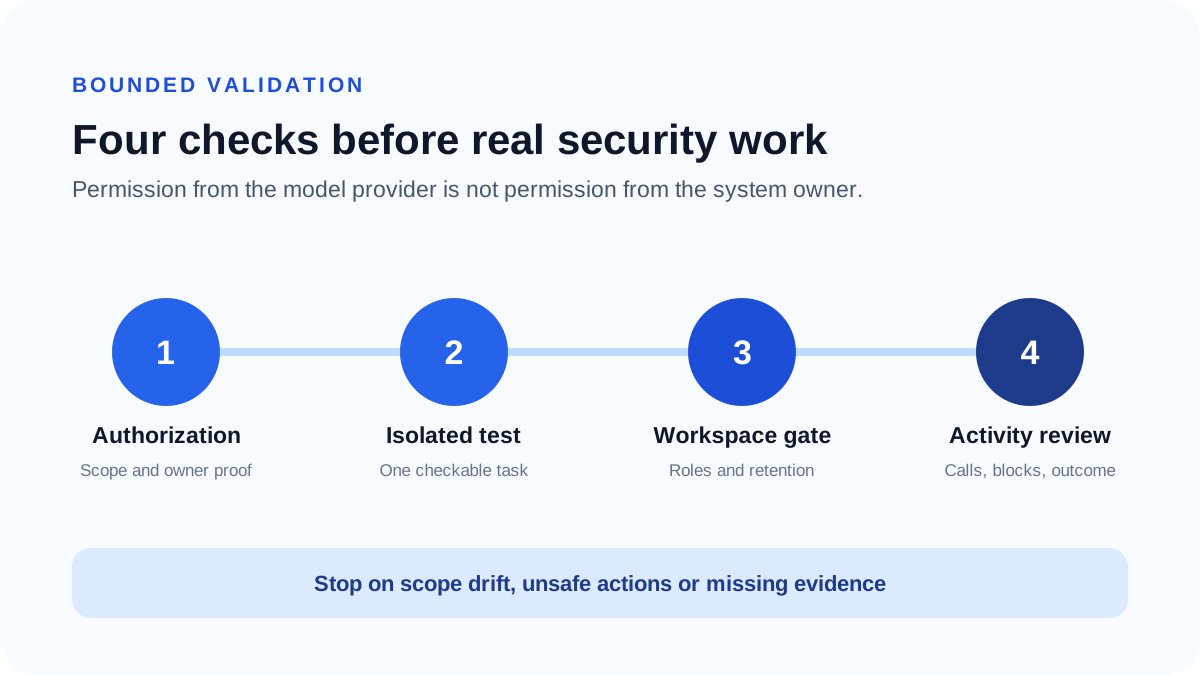
Before applying, prepare the systems you maintain or are authorized to test, the allowed actions and the point at which the workflow must stop. Do not use a public target or a customer's production system for the first acceptance run, and never treat fewer model blocks as authorization from the system owner.
Workspace administration and retention are separate gates
Approval does not automatically enable every teammate. Claude Console and Enterprise administrators assign the program to workspaces or roles, while Team, Max and Pro use a different organization-level path. Anthropic lists Claude Platform, Google Cloud Vertex AI and Microsoft Foundry as supported surfaces; Amazon Bedrock access is limited to customers eligible for Enterprise Frontier Safeguards.
Program activity generally requires data retention so Anthropic can monitor cyber misuse. Anthropic says eligible organizations will be able to keep data in infrastructure they control when Enterprise Frontier Safeguards becomes available. Until then, zero-data-retention use is limited to the stated Fable or Mythos exceptions. Review contracts, retention and workspace scope before submitting real vulnerabilities or customer data.
A practical way to use the change
Start with generally available models for read-only review, patch suggestions and scanning code you own. Apply for a tier only when a legitimate authorized task is being blocked. After approval, run one checkable task against an isolated copy and retain the scope, tool calls, classifier behavior and human conclusion.
Use our prompt-injection guide for untrusted inputs, the activity-log guide for trace review, the MCP guide for narrower tool permissions and the privacy guide for data boundaries. These do not replace CVP approval or penetration-test authorization, but they make the first validation run easier to inspect.
Source notes
Event date and our publication date are shown separately. Community reports describe individual experiences.