
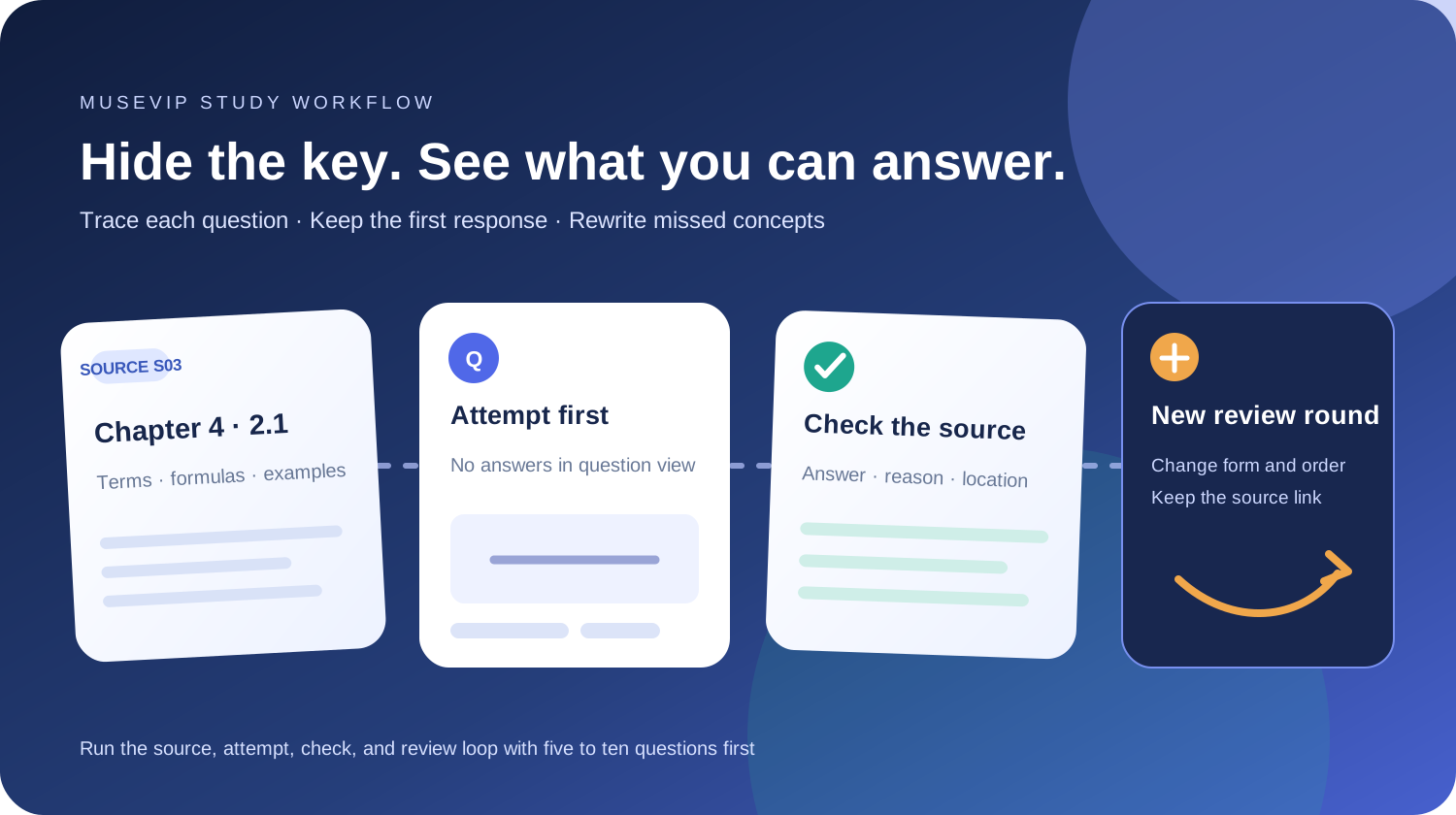
This guide focuses on “Muse study guide” and turns the question into practical steps you can check.
01 | Use a source-bound practice set
A chapter can look familiar until you close the notes and try to answer a question. Give Muse one small section, ask for a short practice set, and record your answers before opening the key. Then check the source and use the mistakes to shape the next round.
Meta lists an interactive study guide as a Muse Artifact example. The official pages do not specify one universal quiz or answer-reveal control. This guide follows a task-based workflow using the creation tools visible in your account; chat or a document can support the same method. Meta AI's learning advice informs the checking steps without establishing identical Muse controls.
02 | Start with one reviewable unit
Choose one chapter, lecture, or short assigned reading. Give each item a source ID and record the section, page, paragraph, or timestamp included in this round. A question should be able to point back to that location.
Use an attachment or connected source only when your account shows the route and you have permission. Otherwise paste the necessary text or provide an accessible public link. Ask Muse to list what it can actually read before it creates questions.
- Source ID, title, edition or version, and publication date.
- Included chapters, pages, timestamps, and class topics.
- Material the instructor has marked as required or out of scope.
- Definitions, formulas, and terminology that answers must follow.
03 | Map questions to evidence first
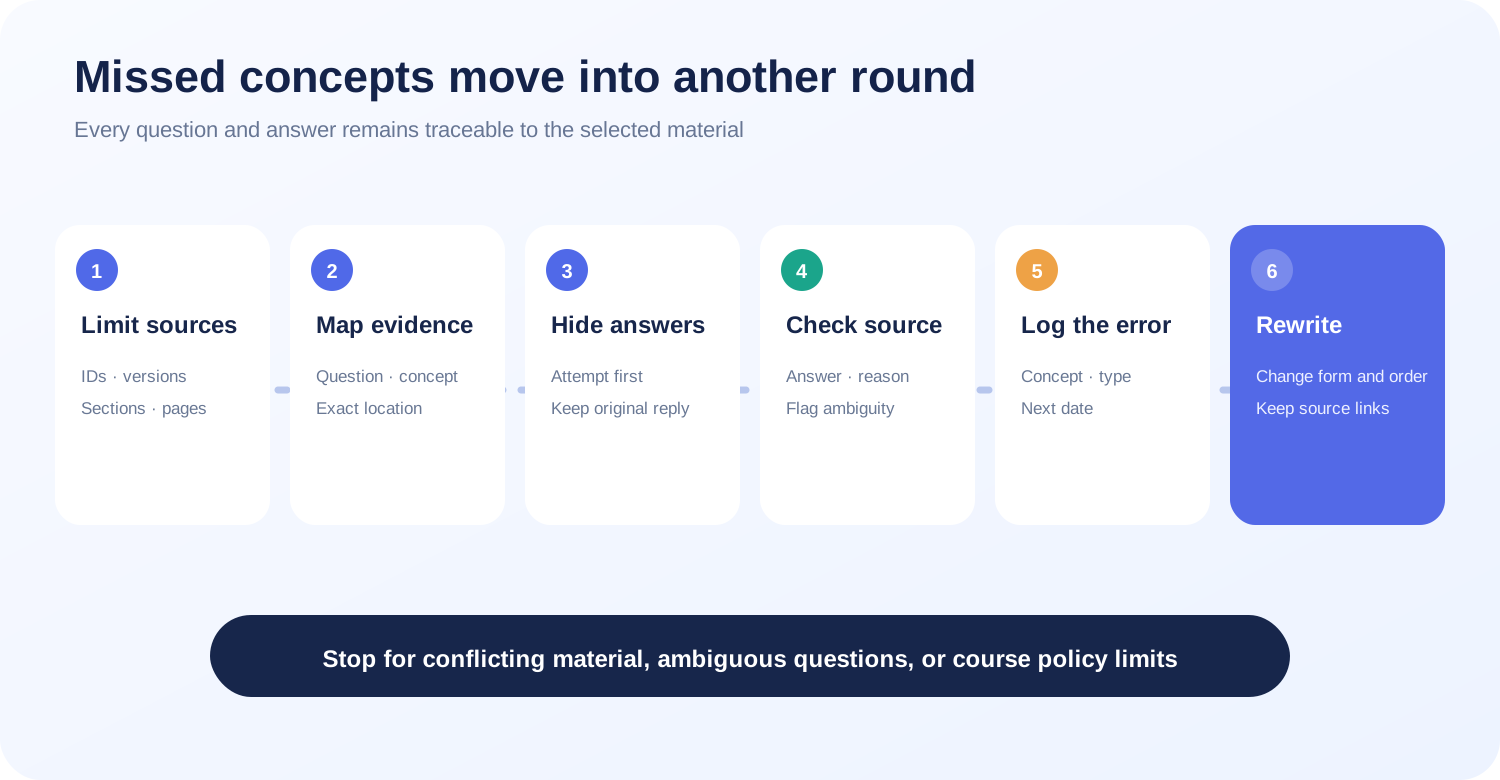
Ask for a planning table before the quiz. Each row needs a question ID, concept, source ID, exact location, and response type. Split a question when it quietly combines separate chapters. Move any outside-knowledge question into a clearly labeled extension set and exclude it from the score for this source-bound round.
04 | Copy this task brief
Replace the brackets and approve the source map before beginning the attempt.
Create a self-test from [chapter or source range]. First list the source IDs, versions, and sections you can actually access. Every question must be answerable from those sources. Mark missing evidence as insufficient material instead of filling the gap from general knowledge.
Provide a question map with the question ID, concept, source ID, and exact source location. Create [number] questions using [response types] at [foundation or advanced] difficulty. Keep the question view free of answers, hints, and copied source sentences. Put the answer key later, with a concise explanation and source location for every item.
During the attempt, ask one question at a time and wait for my answer. Preserve my original wording before checking it against the source. For every missed item, record the question ID, my answer, checked answer, source location, error reason, and next review date. Flag ambiguous questions for human review.
For the next round, write new questions about the missed concepts, change the wording and order, and mix in a small number of previously correct concepts. Keep every source location. Do not tell me that I have mastered the subject or predict an exam result.
05 | Create a question view and an answer view
Use a collapse, flip, or reveal control only if the current Artifact offers one. A separate answer page, a key at the end of the document, or a second file works when it does not. The requirement is simple. Finish the response before seeing the key.
Keep the original response. It shows whether the problem came from recall, interpretation, a calculation, or reading the constraint in the question. Editing the response after seeing the key removes that evidence.
06 | Check the key against the material
Open the cited location for every missed or disputed answer. Confirm that the material supports the same wording, scope, and conditions used in the key. Correct the source map when a question cites one page and the answer comes from another.
Review distractors in multiple-choice questions. A distractor should be wrong for a reason supported by the course material. For short answers, use clear scoring points while allowing equivalent wording. Send borderline answers to an instructor or the person responsible for the material.
07 | Make the error log actionable
Keep the concept, original response, checked answer, source location, error type, and next action. Useful error types include confused terms, omitted units, wrong formula, missed condition, and unsupported guess. Add a correct answer when it was only a guess and mark it uncertain.
Label an ambiguous item as a question problem so it does not become a learner error. The next round should target the concept recorded in the log instead of repeating the sentence that appeared in the first quiz.
08 | Rewrite missed concepts for the next round
Set review dates around your course plan. A next session, weekend review, or pre-exam date is enough. Muse should not present one interval as universally optimal.
Change the form of the question while keeping the evidence boundary. Turn a definition into an example check, a calculation into an error-finding problem, or two confused terms into a comparison. Preserve the new response and run the same evidence check again.
09 | What public study workflows reveal
Student user @adamawadd publicly described Muse scanning student portals for assignments, organizing tasks, and building a plan for an upcoming test. That account's workflow points to a useful starting point: organize the material before making a practice set. It does not establish a universal integration.
A public AI Shortcut Lab video demonstrates a source-to-study-guide, quiz coach, weak-topic, and weekly-review sequence with another product. A detailed r/study discussion similarly asks an AI to rewrite questions around missed concepts and treat course material as the reference. These cases identify a real workflow need. They do not prove that Muse improves grades, memory, or exam readiness.
10 | Stop for policy or evidence problems
A self-test records responses to one generated set. It does not replace instructor assessment or establish command of an entire course. Follow the course policy and return disputed items to the assigned text, teacher, or official rubric.
- The answer cannot be located in the approved material.
- Course sources disagree on a definition, date, formula, or expected method.
- The assignment, quiz, or exam policy restricts generative AI.
- The scoring depends on instructor judgment or an unpublished rubric.
- The system claims mastery or predicts a grade from this practice set.
11 | Check the first small round
Begin with five to ten questions. Expand the unit only after each question can be traced and each missed concept can move cleanly into another review round.
- The source range, version, and date are explicit.
- Every question has a working source location.
- Answers and hints stay hidden until the response is recorded.
- The error log preserves the original answer and a specific reason.
- The next round changes the question while retaining the source boundary.
- No score is presented as an exam prediction or learning guarantee.
References
These sources support the product information in this guide. Musevip is an independent publication and is not affiliated with Meta.
Last reviewed 2026.10.01. Product pages may change.